| |
 |
| |
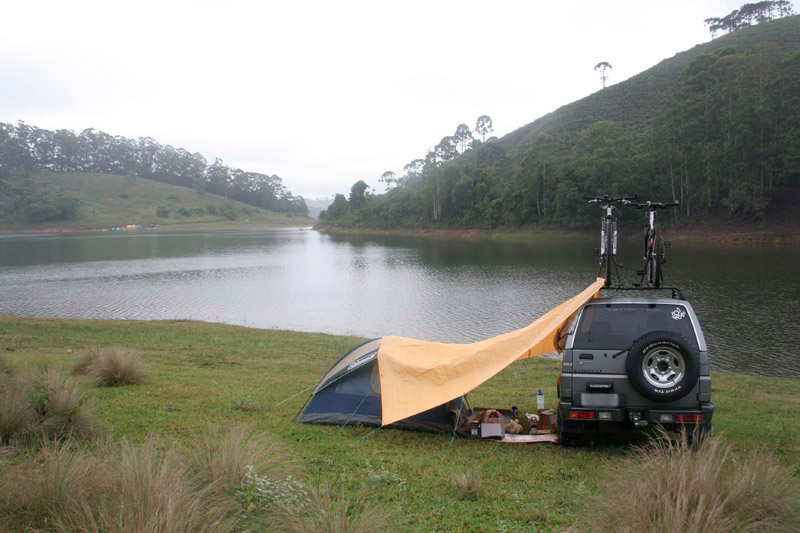
Camping on the margin of Ponte Nova reservoir in Salesopolis county.
Photo: Aman Morbeck |
| |
|
| |
 |
| |
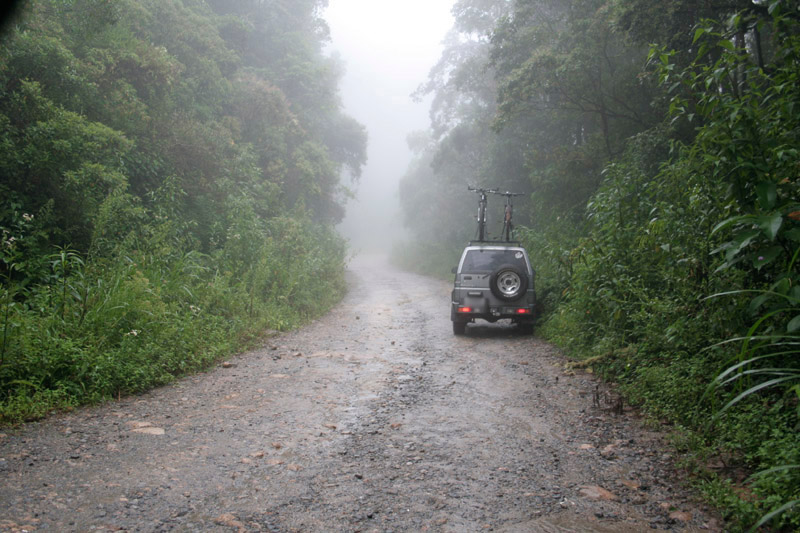
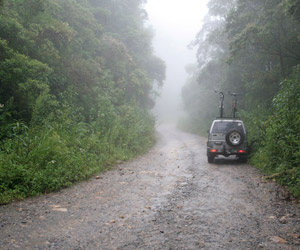
Part of the 9 km of the last portion of the Estrada Real from Cunha to Paraty.
Photo: Aman Morbeck |
| |
|
| |
 |
| |
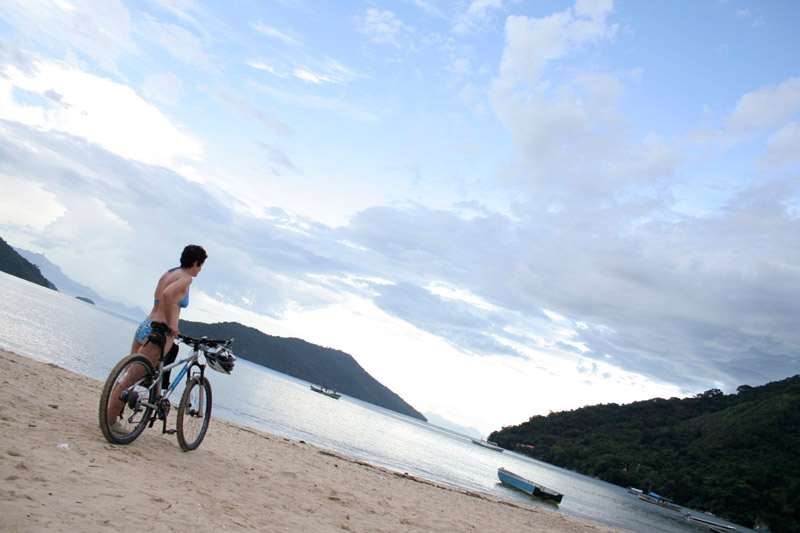
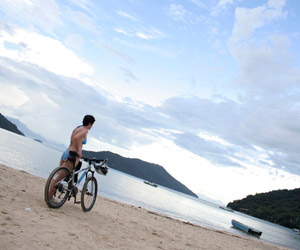
Paraty-Mirim beach at sunset after a 15-km bike ride.
Photo: Aman Morbeck |
| |
|
| |
 |
| |
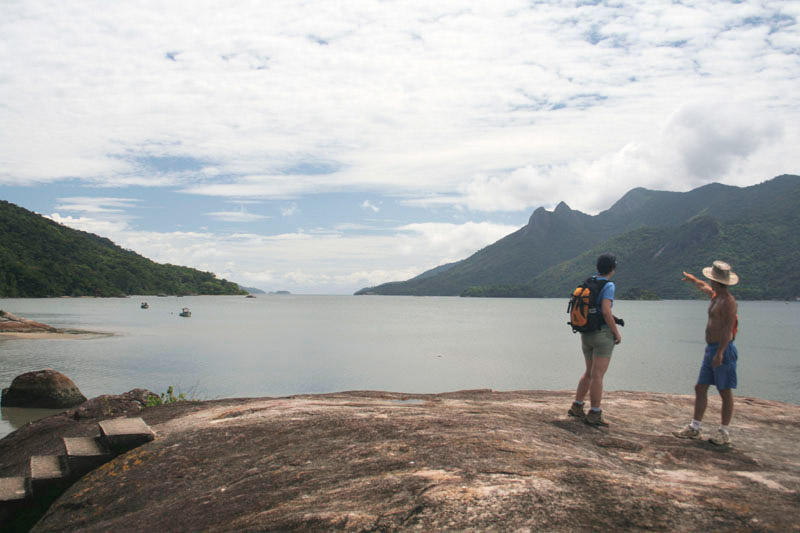
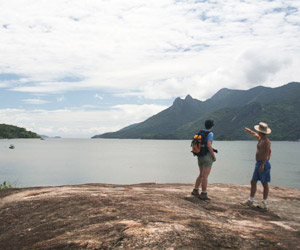
Saco do Mamangua with Pao de Açucar (Mamangua) in the distance.
Photo: Aman Morbeck |
| |
|
| |
 |
| |
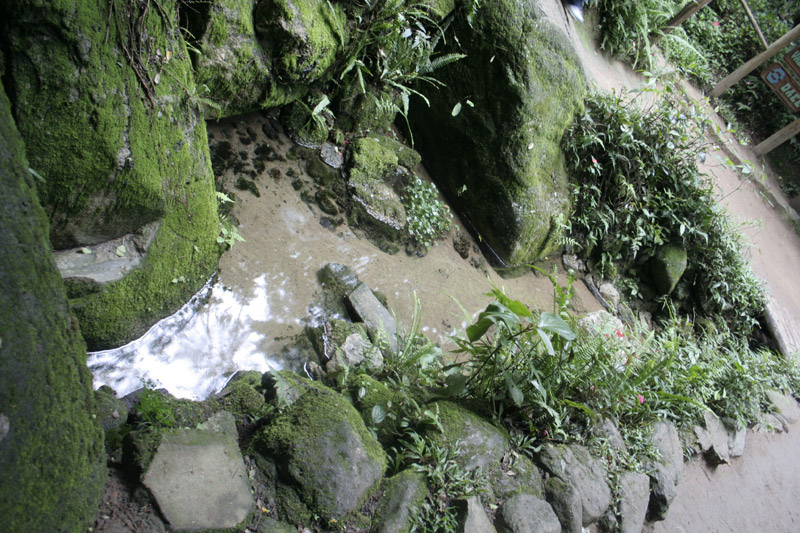
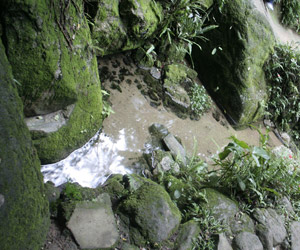
With three riverheads, Tiete river starts here and then runs 1100 km towards Parana river.
Photo: Aman Morbeck |
| |
|
| |
 |
| |
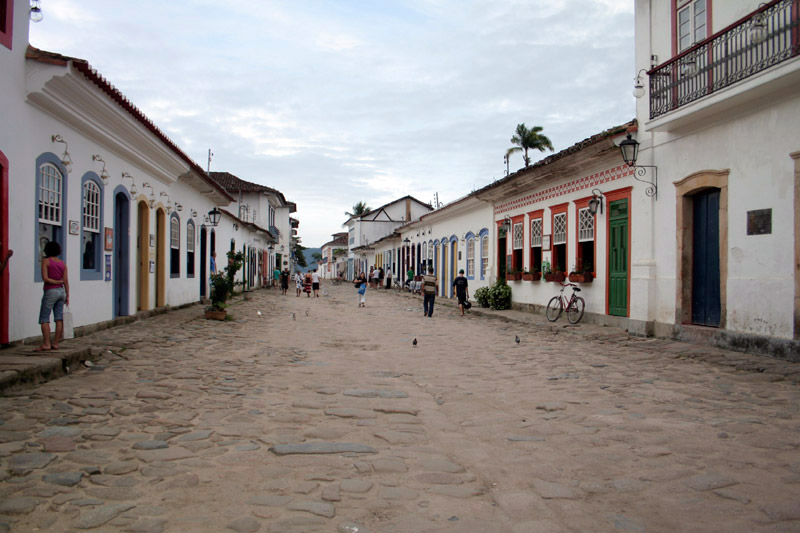
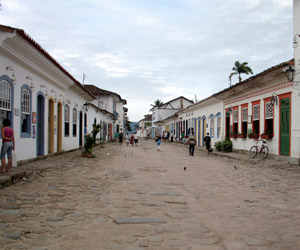
One of the charming streets of the historical city of Paraty with its original stone pavement from the 17th century. Photo: Aman Morbeck |
| |
|
| |
 |
| |
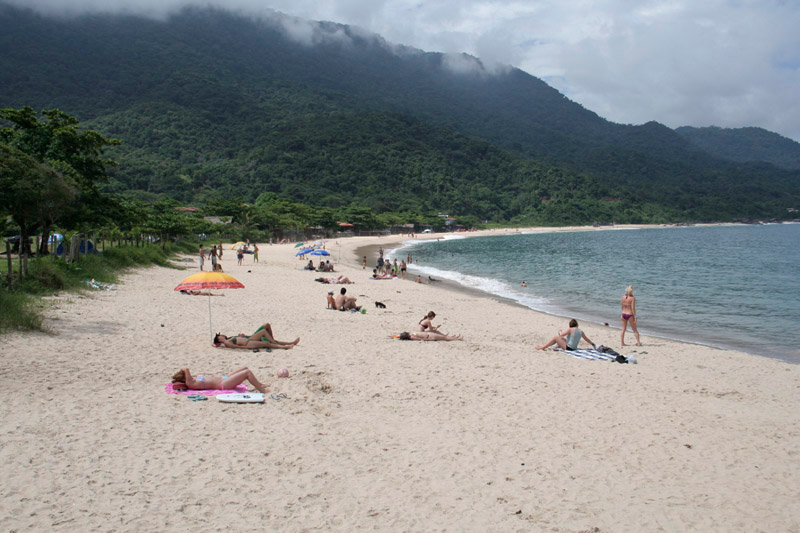
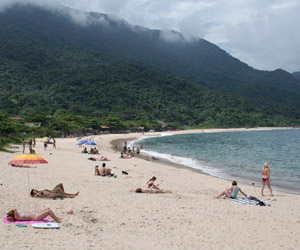
Dos Ranchos beach, in Trindade; on the other side is Cepilho beach, a surfers' point.
Photo: Aman Morbeck |
| |
|
Carnival to me means to be as far as I can from its noise. Days-off are more than welcome and this year I even prolonged my holiday a bit along with a friend.
First, we camped for three days by Ponte Nova reservoir in Salesopolis county, Sao Paulo state, which was really fun. On the first night it rained cats and dogs. Next morning it was cloudy and chilly and drizzled almost all day long. For the other two days the rain would come and go and the sun showed up only for a few hours. Even though, we enjoyed swimming, walking, and mountain biking.
There are several camping areas around the reservoir e there were many people camping on the holiday. We picked up a place almost in the end of the road from Roque neighborhood because there were fishers at our sight, which meant more safety and also silence and tranquility. Landscape there could not be more gorgeous: in front our tent, the water and a hill; on the sides, green grass; and behind, an araucaria woods.
On an afternoon, as we walked along the reservoir margin, we ended up collecting two large bags of garbage left by other careless visitors. And what is funny is that there are places for the garbage to be disposed along the road, which means no one needs to take it back to the town. Anyway, by doing that we felt somehow we were thanking mother nature for giving us for free such a special place that truly needs to be preserved.
After those resting days, we left and went visiting the Parque Nascentes do Tietê, still in Salesopolis county, where we can see the three headrivers of Tiete river. It is almost unbelievable that its water is so clean and drinkable. It is pumped up to be consumed – and even taken home if you have a container – coming out from a few faucets placed by the small museum and the souvenir shop. Nowadays, vegetation in the park has been restored and there are three short trails to the headrivers. By them, there is a young lady that tells visitors about its discovery, that happened in 1954, and teaches them on how to identify natural signs that indicate air and water purity.
From there we headed to Paraty, in Rio de Janeiro state. In order to enjoy the beauty of Serra da Bocaina vegetation, we drove the in last part of the ancient Estrada Real from Cunha, in Sao Paulo state, with its 9 km of dirt road full of holes, rocks, and at that day, a lot of mud. Rain was our companion all the way down and the mist was a special touch to the landscape. In some curves the ground was really slippery. If you want to take this road, chose the way down, as we did, especially if you do not drive a 4-wheel-drive. The way up is really tough for other type of cars and extremely forces the engine. Along the road there are several totems showing where you are in the Estrada Real.
Our way down was slow and we had to check the bikes on the roof of the car from time to time, but finally we arrived to our goal that day: the rustic and cozy Pousada Vila Volta (www.vilavolta.com.br) in Paraty-Mirim. The "pousada" is right in Serra do Mar, surrounded by "mata atlantica" and only 13 km from the historical town of Paraty. We had a lot to do for the next days but the tranquility, silence, and the green around were so good that we had no wish to leave Vila Volta. Let alone the natural pool from a stream that comes down the mountain and the kindness of its owners, the Brazilian Andre Luis Rodrigues Goes and the Dutch Gerardus Adrianus Maria De Bruine, or just Dus.
But we also wanted to explore the surroundings and went trekking to "saco do Mamangua". The first hour in the trail – surrounded by mata atlantica – is all way up. When we reached the point where the trail starts going down to sea level, we saw few houses of "caiçaras" (locals) and the vegetation changed completely, the trees disappeared, and after a few minutes we could see the Mamangua in the distance. That view gave us extra stamina to keep on walking up there.
When we got to the beach, there was us a boat waiting for us. Andre had arranged it in advance. The day was beautiful and that calm, warm, and emerald water was so inviting, therefore we went by boat to Antas beach, where we swam for quite a while. What a wonderful place with green all over and that amazing marriage between sea and mountain. For its peculiar characteristics, saco do Mamangua is considered the only Brazilian fiord. Long time ago only caiçaras lived around it, getting their living from fishing. Nowadays there are very few of them, though. The majority sold their land and left for town in search of a better life.
Still on Antas beach we had a snack to get set for our next adventure: to go up the 400 meters of altitude of Pao de Açucar (this is not that one in Rio de Janeiro city), one of the mounts around the saco. From a distance we could see it would not be that easy to reach its top but it was more difficult than we had anticipated. We crossed by boat to the other side from where we started to go up its steep relief. In three points we had to use ropes to help us to move forward and sometimes we had to go down on our four. However, when we reached the top, after an hour-walk, all tiredness from the effort disappeared miraculously. The view up there is amazing! It is possible to see the whole saco having the mangrove on the left and Paraty bay on the right. From up there, boats on the water looked like toys. Unfortunately, as we walked up the day became very cloudy and because of low clouds we could not see much further but it was wonderful anyway. We walked back happy-hearted and feeling rewarded.
On the beach we swam again before heading to mister Zizinho restaurant where a traditional caiçara lunch – rice, beans, fried fish, and salad – awaited us. From the porch right by the water we could see the other side of the saco and also the Pao de Açucar from where we had just come down. It looked much higher to us then.
After lunch, the boat took us to Paraty-Mirim beach from where we, deliciously tired, went back to Vila Volta. For this program I recommend you to take at least one trekking pole, not go for it in case you have any knee problems, have your swimming suit underneath your clothes, wear sun block and insect repellent, and take snacks and water in a light backpack.
Paraty-Mirim is in Paraty suburb and was named after the river that runs into its calm water. Besides the small white beach, there are also ruins of an old emporium where black people from Africa were kept to be sold to farmers from Sao Paulo state. Nossa Senhora da Conceição chapel, built in 1696, is the only one that has been restored from that time. Nowadays there are small but modern houses around and from the beach boats leave to saco do Mamangua and other beaches and islands.
Next day I took a bike ride – on dirt road – from Vila Volta to Paraty-Mirim, including 3 km (6 km back and forth) towards Campinho da Independencia quilombo (settlements for slaves that ran away from their owners in the colonial era in Brazil; now their descendents strive to keep the land and live with dignity). This one is right by BR-101 road only 200 meters to the left from the end of the dirt road. There is no much to be seen there besides the handcraft shop where their handwork is displayed and can be bought.
Then I finally got to the way to the beach easily biking along Paraty-Mirim river on the left side. There are no hills and cars cannot run very fast because of the road conditions. The only few – and hilly – meters that are paved cross a Native Brazilian reserve that, towards the beach, allow bikers to speed a lot but when it is time to bike back from the beach…
Along the way, having the river on the left and the mountain on the right, there are several houses and many locals ride their bikes around. They all gave me this funny look as if someone wearing a helmet and gloves just to ride a bike was too weird for them. After 15 km I got to the beach at sunset. After swimming a bit I took the way back to the pousada, biking 23 km total.
One of the days was spent in Trindade, a small and cozy village with its restaurants, pousadas, cafes, shops, and camping areas facing the sea. Since we could not see all the places there, we chose Dos Ranchos beach that runs parallel to the main street. On this part the sea is calm and there are bars and restaurants at the beach. We walked all the way to the other side of it where there is Cepilho beach, a point for surfers thanks to its rough sea. It is amazing to observe how the water strength changes as you walk toward Cepilho. The two beaches are separated by a group of large and high rocks strongly hit by the sea all the time.
And at last, the beautiful historical town of Paraty, which is only 5 meters above sea level. Therefore, when there is high tide the water runs through its original stone paved 17th-century streets. For this, the town is also known as Brazilian Venice. Houses' façades are painted in white with doors and windows in green or red or blue or yellow and prohibition of car traffic in this area makes walking a real pleasure.
Souvenir and cachaça (traditional Brazilian spirits) shops, restaurants, ice cream parlors, cafes, and pousadas are open until late for the tourists. There, I recommend the crepes in the charming French bistro Le Castellet (44 Dona Geralda Street – across teatro Espaço) and the lasagna made with "pupunha" (a kind of palm tree) in the O Cafe (253 Comercio Street). There is also this very traditional coconut sweet sold in handmade carts on the streets.
But if you are too lazy to leave Vila Volta to get to Paraty just to eat, let me tell you that Dus is an excellent cook and can prepare delicious recipes from different countries such as Indonesia. Before going to bed you can also watch a movie in the little living room.
I had no wish to come back to Sao Paulo city, especially because there were many other activities – kayaking, trekking in Juatinga reserve, waterfalls, etc. – waiting for us. We will go for them next time.
|